Home / Guides
Construction and plant guide
How to remove concrete from trucks and machinery
Hardened concrete and cement splashes won't wash off with ordinary detergents. Here's a safe, step-by-step way to tackle them with a dedicated concrete remover.
Use
A concrete remover
First
Test a small area
Never
Let it dry on
Wear
Gloves and eye protection
Why concrete is so hard to remove
Concrete and cement set hard and bond to whatever they land on. Once a splash has cured on a mixer drum, chassis, wheel or bucket, it won’t come off with water, vehicle shampoo or an ordinary traffic film remover, because those are made for road grime, not mineral deposits.
To shift it without hours of chipping and scraping, you need a dedicated concrete and cement remover, used carefully and on surfaces it’s approved for.
Act early: fresh splashes are far easier to remove than concrete that has been left to cure for days. Washing concrete-exposed vehicles at the end of each working day saves a lot of time and chemical.
What you need
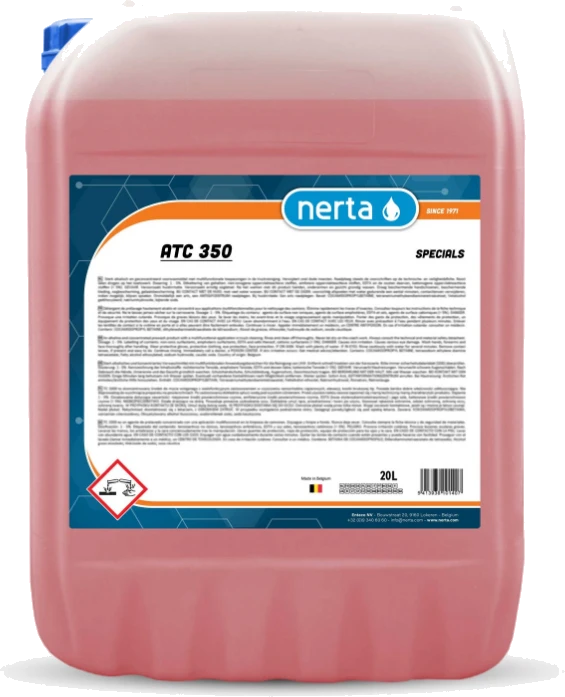
- Nerta ATC 350, a professional concrete and cement remover.
- A pressure washer for thorough rinsing. See our pressure washer range.
- A sprayer suitable for the product. Browse our pressure sprayers and check the product label for what’s suitable.
- Protective equipment: chemical-resistant gloves and eye protection as a minimum, plus anything else the safety data sheet lists.
How to remove concrete, step by step
- Assess the deposits and the surfaceCheck how thick the concrete is and what it’s sitting on: paint, aluminium, steel, rubber seals, glass or plastic. Not every surface is suitable for the same chemical.
- Read the label and safety data sheetConcrete removers are strong professional chemicals. Follow the current Nerta label and safety data sheet for dilution, contact time and protective equipment.
- Test a small hidden areaTry the product on a small, out-of-sight patch first and check the surface afterwards before treating the whole area.
- Apply to the concrete onlyApply ATC 350 as directed, working in manageable sections and keeping it off sensitive parts, seals and surfaces the label doesn’t approve.
- Don’t let it dryKeep to the contact time on the label and never let the product dry on the surface.
- Rinse thoroughlyRinse the treated area with plenty of clean water using a pressure washer, until all product and loosened residue is gone.
- Repeat on thick deposits, then washHeavy build-up may need more than one treatment. Finish with a normal wash, for example with Active Diamond Foam.
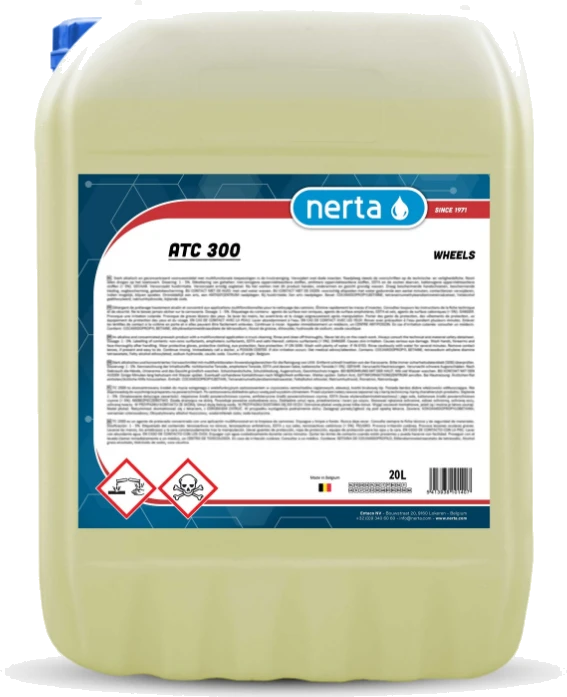
ATC 350 or ATC 300?
| Product | What it is | Good for |
|---|---|---|
| ATC 350 | Dedicated concrete and cement remover | Construction vehicles, concrete-handling equipment and site machinery |
| ATC 300 | Heavy-duty acidic aluminium cleaner that also tackles cement deposits, brake dust, rust and scale | Cement tankers, mixers, aluminium parts and heavily contaminated truck wheels |
Both are professional products. If you’re not sure which suits your vehicles or surfaces, contact us before you buy.
Frequently asked questions
Can I use a traffic film remover to remove concrete?
No. Traffic film removers are made for oily road grime. Cured concrete and cement need a dedicated concrete remover such as ATC 350.
Is concrete remover safe on paint?
It depends on the product and the surface. Check the label for approved surfaces and always test a small hidden area first.
Will it work on old, thick concrete?
Heavy, long-cured deposits usually take more than one treatment. Fresh splashes are much easier, so wash concrete-exposed vehicles often.
Where can I buy ATC 350 in Ireland?
MRC Chemshop is the sole Irish distributor of Nerta. You can order ATC 350 online with delivery across Ireland.
This guide is general advice. Always follow the current product label and safety data sheet. You can request safety data sheets from Nerta Ireland, and see the full range at nerta.com.
Concrete remover
Nerta ATC 350
Professional concrete and cement remover for construction vehicles and equipment, delivered across Ireland.
Shop ATC 350 →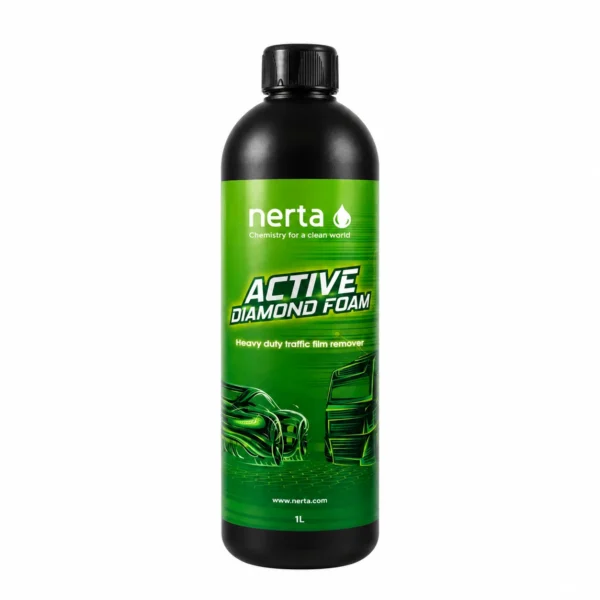
Not sure what's safe to use?
Ask us before you treat it
Tell us what the concrete is on and what the vehicle or machine is made of, and we'll point you to the right product.